


AI-made images are looking more realistic day by day. You can whip up portraits in seconds and speed up edit jobs that once took ages. With these swift changes, it’s no surprise that photographers are asking: Will AI replace photographers?
The short answer is no. But the reality is a bit different. While AI is transforming how images are created and edited, there are still many things it can’t replicate. In this article, we’ll explore the shifts happening in the photography world, what remains unchanged, and tips for photographers to thrive with AI around.
So, will AI replace photographers?
Quick Answer
No, AI will not replace photographers as a whole. It is automating generic, repetitive work like stock photos, basic product shots, and simple real estate listings, while human photographers stay essential for weddings, portraits, fine art, and photojournalism. US employment data backs this up: the Bureau of Labor Statistics projects photographer jobs will stay roughly flat through 2032, not collapse.
Now, here’s a closer look at the details!
Table of contents
- Quick Answer
- AI In Photography Isn’t The First Revolutionary Shift
- What AI Can Actually Do in Photography Right Now (2026)
- What AI Replaces & What It Simply Can’t
- AI’s Dependence On Human Creativity
- Why Human-Created Art Will Always Be Irreplaceable
- What the Data Actually Says About Photographer Employment
- Where Photographers Remain Irreplaceable
- How Smart Photographers Are Using AI, Not Fighting It
- So, Will AI Replace Photographers? Here’s The Real Answer
- FAQs Related To “Will AI Replace Photographers?”
AI In Photography Isn’t The First Revolutionary Shift
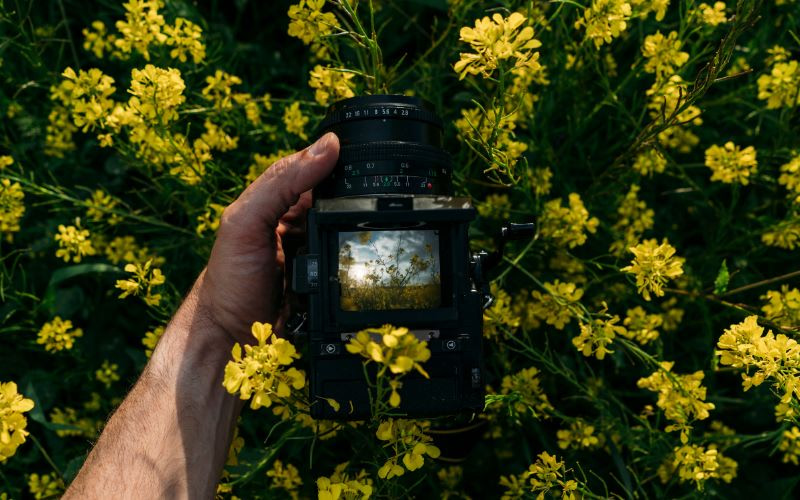
Before we panic about AI, let’s zoom out for a second.
When the camera was invented in the 1830s, painters genuinely feared their profession was over. Why commission a portrait painting when a camera could capture a face in minutes? The French painter Paul Delaroche reportedly declared, “From today, painting is dead.”
Painting is not dead.
Then came digital cameras in the 1990s. Film photographers said the soul of photography would be lost. Then came smartphones. Then Instagram.
Every wave of new technology triggered the same fear. And every single time, photographers adapted, found new niches, and kept creating.
AI is coming along as the next wave. It’s bigger than most, and it would be dishonest to pretend otherwise. But the pattern, technology disrupts photography, photographers survive it, is older than most people realize.
The question was never “Will this technology change photography?” It always will. The real question is: what changes, and what stays the same?
Here’s a closer look at how AI photo editing tools are revolutionizing photography in practice.
What AI Can Actually Do in Photography Right Now (2026)
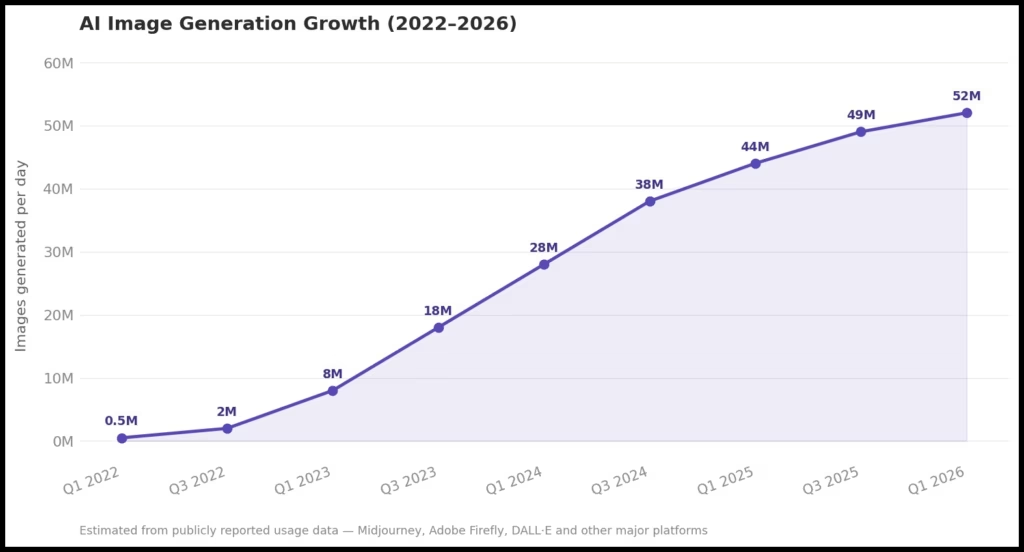
1) AI Image Generation
Tools like Midjourney v6, Adobe Firefly, and DALL·E 3 can produce photorealistic images from a simple text prompt. You can type “a woman in a red dress standing in a rainy Tokyo street at night, shot on 35mm film” and get something convincingly real. The hands look right. The lighting is coherent. The details hold up.
If you want to go hands-on with the tools driving this change, this Midjourney and Magnific AI masterclass covers both platforms in depth.
2) AI-Assisted Post Processing
This has transformed post-processing. Adobe Lightroom’s AI Denoise, Photoshop’s Generative Fill, Luminar Neo’s AI skin tools- what used to take hours now takes minutes. Photographers themselves are using these tools to work faster and better.
3) AI For Stock Photography
Disruption has hit hardest here. Adobe Stock, Shutterstock, and Getty Images have changed their AI-generated content policy. The generic stock photo – smiling business person, business handshake, aerial view of a city – are now all likely to be affected by this change in policy.
4) AI-Powered Camera Features
The emergence of artificial intelligence in cameras will also change how people shoot photos. Sony, Canon, and Nikon all offer AI camera features today, including eye-tracking autofocus, AI scene recognition, and automatic exposure bracketing built into their mirrorless cameras. This means that AI exists in your camera too – not just at the editing stage of using these cameras.
Therefore, AI has entered the world of photography, and it has significant potential to shape the future of photography. The next question is, “What’s going to be replaced by AI?”
What AI Replaces & What It Simply Can’t
This is where the real answer to ‘will AI replace photographers’ lives. Not in the hype, but in the specifics.
| AI is replacing Lower value, volume-driven work | Humans Still Own Presence, judgement, relationship |
| Generic Stock Photography AI faster, cheaper, infinite variation | Weddings & Events Unrepeatable moments, human presence |
| Simple Product Photography White backgrounds, renders, mockups | Fine Art Photography Intent, authorship, collector value |
| Basic Real Estate Photos AI Virtual Staging Replacing Shoots | Photojournalism Physical access, ethical accountability |
| Automated AI Retouching Skin, background removal at scale | Portraits & Personal Work Human connection, seen and heard |
A) What AI Is Genuinely Replacing:
The most apparent victim of this new development is generic stock photography. If your livelihood revolves around selling images of coffee mugs, laptops on desks, or generic cityscape images, your area of business is dwindling. AI can create such photographs at a much lower cost.
Simple product photography with plain backgrounds is also at risk. A T-shirt on white? AI handles that. A perfume bottle render? Same story.
Basic real estate photography for standard listings is increasingly being replaced by AI-enhanced virtual staging and generated imagery.
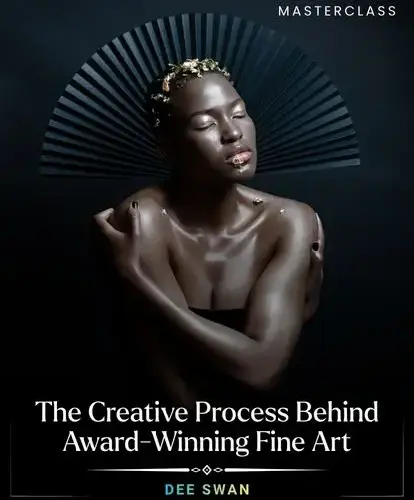
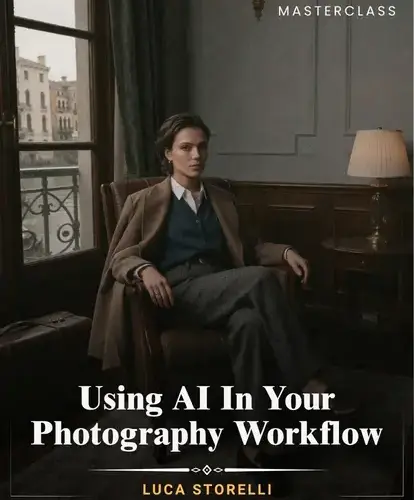
If you want to understand exactly how to use AI to your advantage, this AI photography masterclass is the place to start.
B) What AI Simply Cannot Replace:
- A wedding photographer is more than just someone who clicks a shutter. They must read the mood, feel the vibe of the moment, understand family dynamics, reassure a nervous bride, and produce a good laugh from the groom at the precise moment of the wedding. There is no robot in that space.
- Sports and photojournalism require being in the right place at the right moment. An AI cannot be in a war zone. It cannot be courtside. It cannot bear witness.
- Fine art photography is about intent. The meaning comes from a human decision: the choice to press the shutter at that moment, in that light, from that angle. AI generates. It does not decide.
- Human connection is an important factor in the creation of portraits. People hire a photographer when significant events occur in their lives. They want someone who will truly see them. You cannot recreate that relationship.
- The future of photography with AI is not a story of replacement. It’s a story of division. Some work goes to AI, some stays with humans, and the boundary is becoming clearer every year.
AI’s Dependence On Human Creativity
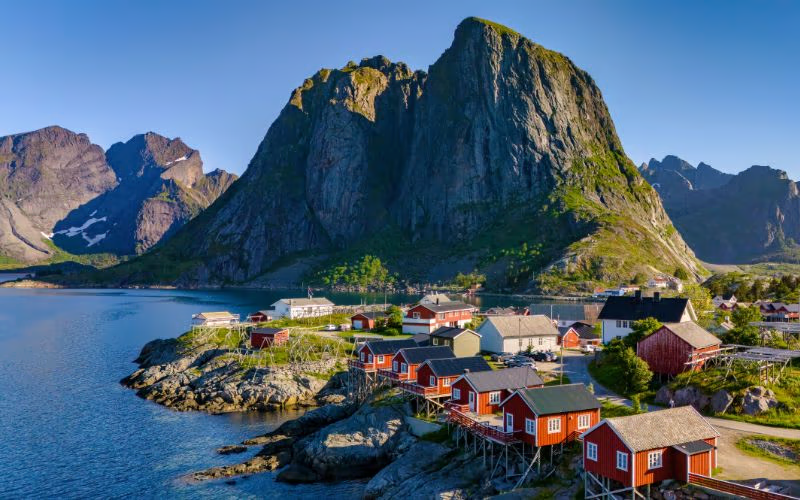
Human-Clicked Image
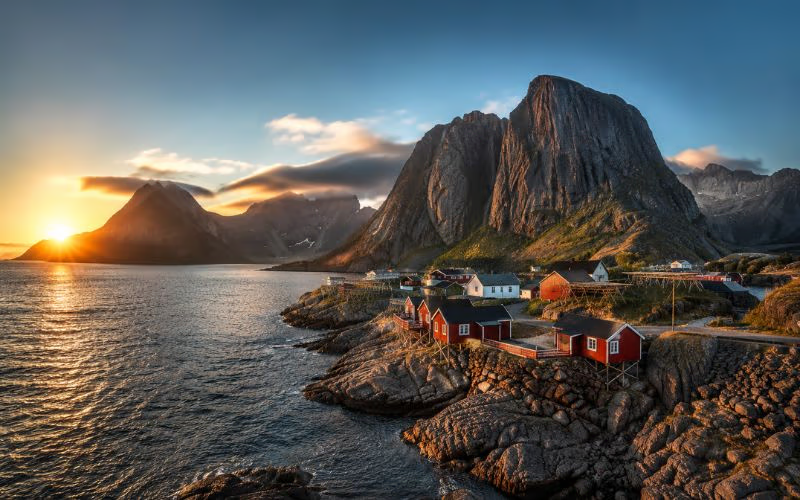
AI-Generated Image
Here’s something that doesn’t get said enough: AI image tools are entirely dependent on human photographers.
Every model that generates a “photorealistic” image was trained on millions of actual photographs taken by actual people. The way AI understands light, composition, color, and emotion comes entirely from studying human creative work.
Without photographers, there is no AI photography.
Beyond the legal battles this has sparked, think about what it means creatively. AI can remix. It can interpolate. It can combine styles in ways that look new. But it cannot have a genuinely original creative experience.
Even the most advanced AI tools work best when a human photographer is steering the creative vision. If you’re wondering how that actually works in practice, here’s what an AI photo shoot is and how you can benefit from it.
Why Human-Created Art Will Always Be Irreplaceable
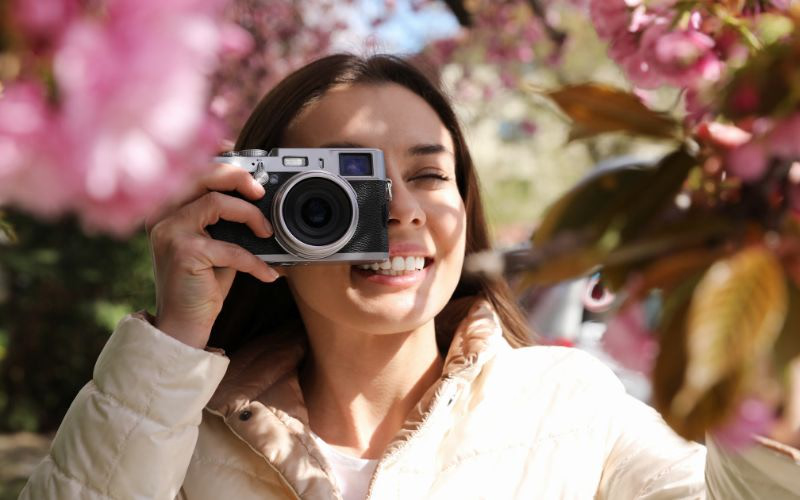
Art is not just a product. It’s a communication between two humans: the one who made it and the one who experiences it.
When you look at a powerful photograph, you’re not just seeing an image. You’re connecting with another person’s way of seeing the world. That connection requires a human on the other end.
An AI does not have a childhood. It does not have grief. It does not know what it feels like to stand somewhere and feel something so strongly that you raise a camera to try to hold onto it.
These experiences are what give art its depth. And they can never be simulated, only approximated on the surface.
This is why, even if AI produces technically flawless images, human-created photography will always occupy a different category of value. It’s not just about what the image looks like. It’s about knowing a human being chose to make it.
Collectors know this. Galleries know this. And increasingly, consumers know this too.
What the Data Actually Says About Photographer Employment
When people ask will AI replace photographers, most expect a yes or no. The employment data gives a more nuanced answer.
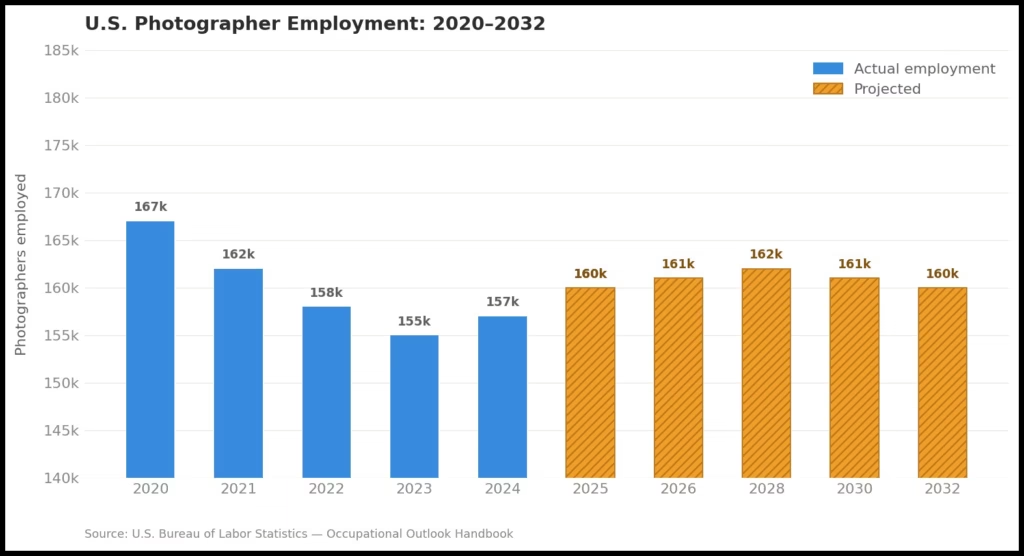
Enough philosophy. Let’s look at the numbers.
According to the U.S. Bureau of Labor Statistics, employment of photographers is projected to change little or not at all through 2032. Not a collapse. Not a surge. Relative stability in the context of AI growing faster than almost any technology in history.
What the aggregate numbers hide is the shift happening within photography.
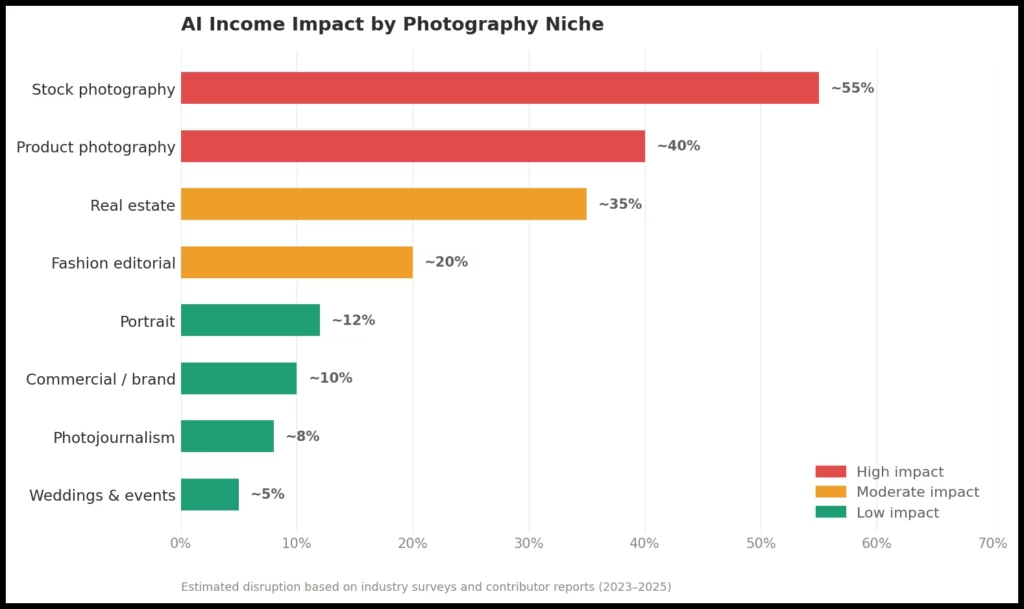
Stock photography income has dropped significantly for many contributors. Some report 30 to 60 percent declines since AI image generation became mainstream. Shutterstock and Adobe Stock have both cut contributor royalty rates in recent years.
But in other areas, demand has held or grown. Event photography, commercial photography, portrait studios, and specialized industrial photography have not seen the same declines.
Some sectors, particularly content creation for brands and social media, have seen increased demand for authentic photographic content, precisely because AI-generated imagery has flooded the low end of the market.
The pattern is not “photographers are disappearing.” It’s “certain types of photography are being automated while others are becoming more valuable.”
Where Photographers Remain Irreplaceable
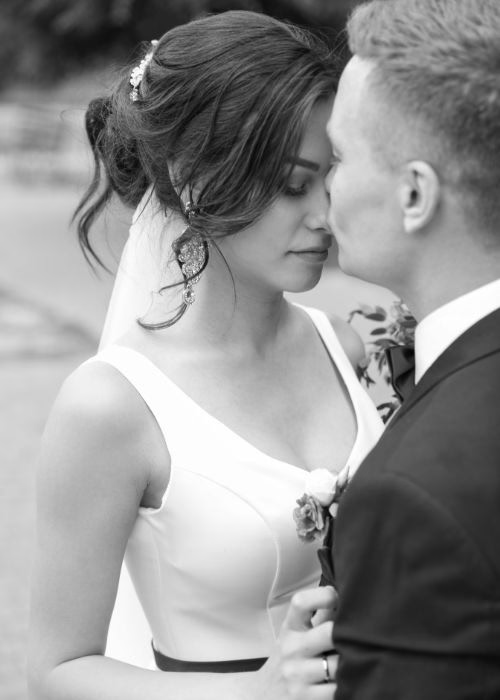
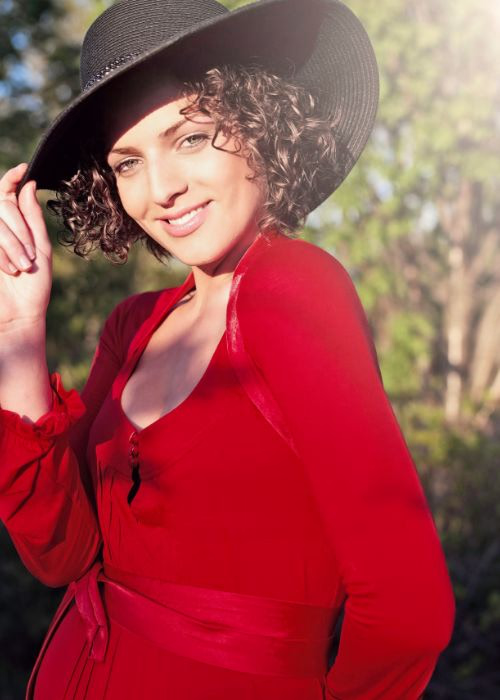

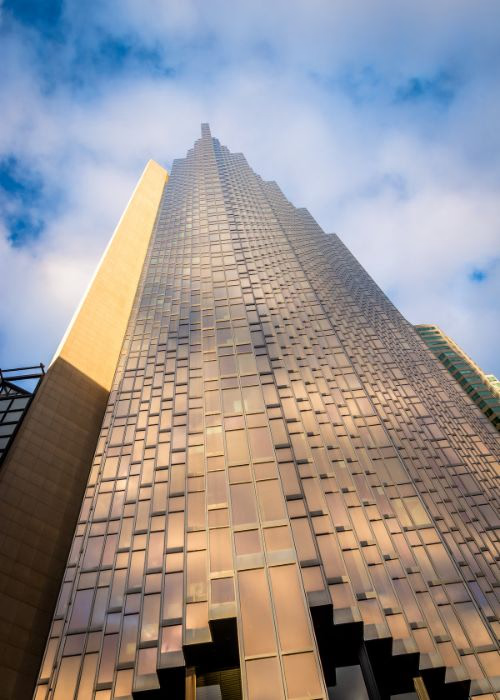
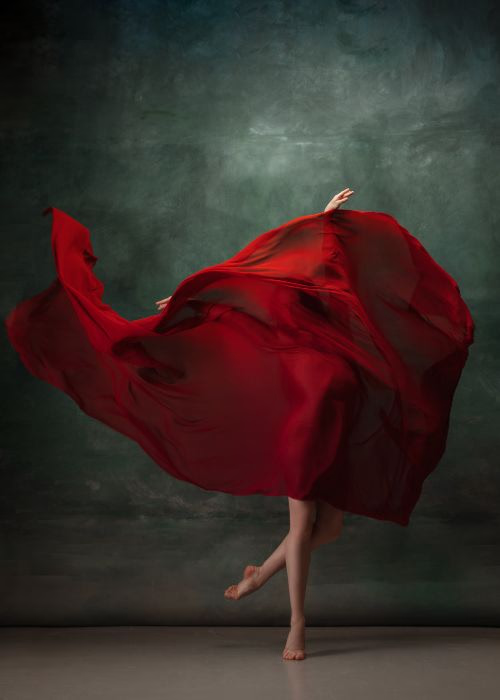
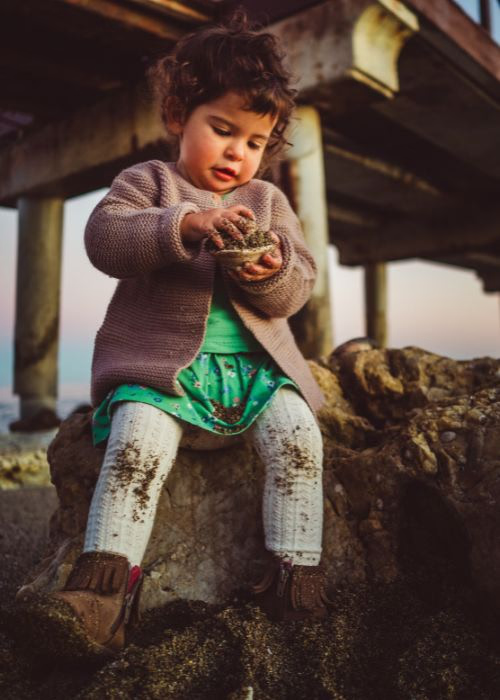
1) Wedding & Event Photography
Unique experiences occur in real-time, where real people are able to connect with those who are close to them on an emotional level. When taking pictures, the photographer will experience the event as well as document it.
If weddings are your niche, this is exactly where to invest your skills: Commercial Wedding Retouching Using AI
2) Commercial & Brand Photography
Brands need photos that have been legally cleared to use, as well as accurately reflect/depict their products, so that consumers have confidence in what they see in the pictures in order to create brand loyalty. This cannot be accomplished with stock imagery or AI-generated images.
3) Documentary Photography
This work requires physical presence, editorial judgment, and ethical accountability. A generated image cannot document reality.
4) Fine Art Photography
The market for original photographic art is not just surviving AI. Collectors are actively seeking out human-made work as a counterpoint to the AI flood.
5) Portrait Photography
Families, professionals, and individuals want to be seen by another person. This is a fundamentally human exchange.
6) Specialized Technical Photography
Medical, scientific, forensic, and architectural photography all demand a human professional with specific expertise and legal accountability.
7) Dating Photography
As dating apps become the primary way people meet, profile photographs have become crucial. A skilled dating photographer does what AI cannot: reads a person’s energy, builds enough trust for natural expressions to emerge, and creates images that reflect who someone genuinely is. For professionals and entrepreneurs who take their personal lives as seriously as their careers, the human connection behind the lens is precisely what makes the photographs work.
How Smart Photographers Are Using AI, Not Fighting It
1) Cutting Editing Time Dramatically
Photographers who used to spend five or six hours in Lightroom after a shoot are now doing the same work in one or two, using AI masking, culling tools, and AI-assisted color grading. That time goes back into shooting more clients or developing their creative work.
2) Using AI to plan and concept shoots
For some photographers, using Midjourney and Firefly as mood boards helps create visual references such as lighting setups and compositions. Instead, most use AI to help brainstorm ideas rather than compete with it.
3) Offering AI-enhanced services as a premium
Rather than losing clients to AI, some photographers are packaging AI editing and generative fill into their service offering. They are charging more for the enhanced final product, not less.
4) Upskilling to stay irreplaceable
Photographers investing in advanced skills like retouching, lighting mastery, fine art techniques, and AI workflow integration are creating a gap between themselves and those who aren’t adapting.
If you want to build those skills, our photography masterclasses are designed for working photographers who want to stay ahead. Or, the best way to stop worrying about AI replacing you is to understand it. The AI Photography Learning Path gives you exactly that, step by step.
So, Will AI Replace Photographers? Here’s The Real Answer
AI certainly has the ability to aid photographers and even replicate their style. But it will never be able to substitute the creativity that human photographers bring to their work.
AI-generated images can be endlessly reproduced. This devalues them. That’s why they become disposable commodities.
Keep exploring more about AI in photography:
- Top Midjourney Free Alternatives & Effective AI Prompt Tips
- Tips To Write AI Prompts That Generate Striking Images
- Top AI Comic Generators For Fun Results
FAQs Related To “Will AI Replace Photographers?”
Q.1 Is AI a threat to photographers?
Ans. AI will not kill photography, but it will fundamentally change the industry. While artificial intelligence is rapidly taking over the creation of generic, synthetic imagery, the demand for authentic, human-captured photographs remains as vital as ever.
Q.2 Is photography a future career?
Ans. The short answer is: yes, if you study photography in a way that aligns with how the industry actually works in 2026. The longer answer is about ROI, employability, and degree-level positioning, not just creative passion.
Q.3 Is photography growing or declining?
Ans. Photography is an expanding industry with a shifting landscape. While casual consumer camera sales have plummeted due to smartphone proliferation, commercial and professional photography services are growing steadily, driven by rising demand for digital marketing, social media content, and event coverage.
Q.4 Will photography become obsolete?
Ans. We believe photography is far from dead, but digital has forever changed our landscape and has allowed for millions of people to explore a new way of capturing special moments. With most cell phones and tablets having cameras, the way people take and view pictures has changed.
Q.5 Will AI replace photographers who don’t upskill?
Ans. Yes, Artificial Intelligence will largely replace photographers whose work is generic, repeatable, or purely functional.
Don’t forget to check out our Studio Community, exclusively made for our plus members.