



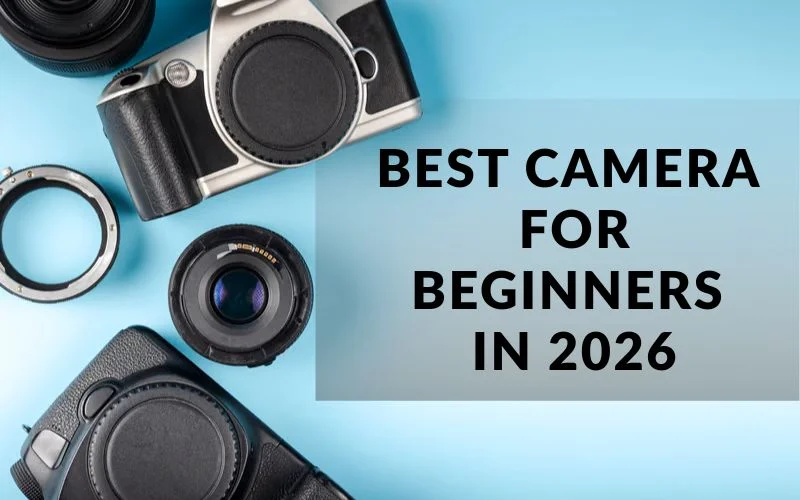
Finding the best camera for beginners in 2026 should be exciting. Instead, most people end up spending hours watching reviews, second-guessing every option, and still not knowing what to actually buy.
In this article, we break down the ten best cameras for beginners right now – what they’re good at, who they’re for, and which one is actually worth.
Quick Answer
For most beginners in 2026, a mirrorless camera in the $400 to $900 range is the smartest starting point, since new DSLRs are being phased out and the lens system matters more than the camera body itself. The Canon EOS R100 is the best affordable all-rounder, the Sony ZV-E10 II is the top pick for content creators, and the Nikon Z6III is worth the extra cost if you plan to grow into serious photography. The right choice depends on what you’ll actually shoot, so check the full breakdown below for details on each.
Love PhotoWhoa? Add us as a Preferred Source on Google to find more of our photography content in Search and AI results.

Table of contents
Before You Buy: 5 Things Every Beginner Should Know
Before we even get to the camera list, let’s talk about a few things that most guides skip over.
1. Don’t Buy a Camera Based on Megapixels
This is probably the most common beginner mistake. You see a camera with 45 megapixels and think it must be better than one with 24. It’s not, at least not for most people.
Megapixels determine how large you can print a photo. For people and creators shooting online content for social media, YouTube, and websites, 20 to 24 megapixels is more than enough. A 12-megapixel photo from a great sensor will almost always look better than a 45-megapixel photo from a cheap one.
What actually matters? Sensor size, low-light performance, dynamic range, and autofocus.
2. Mirrorless Is the New Standard
If you’ve been doing any research, you’ve probably come across the word “mirrorless.” In simple terms, mirrorless cameras don’t have the internal mirror found in older DSLRs. This makes them smaller, faster, and better suited for video. In 2026, mirrorless cameras are the direction the entire industry has moved.
Canon, Nikon, and Sony have all but stopped releasing new consumer DSLRs. All these brands have shifted their focus to mirrorless. For a beginner, starting on mirrorless means you’re building on a foundation that will grow with you.
3. Lenses Matter More Than Camera Bodies
Most beginners are unaware that camera lenses play a major role. The lens you put on your camera has a bigger impact on image quality than the camera body itself.
A $500 camera with a great lens will produce better results than a $2,000 camera with a kit lens that came in the box. If you’re buying on a budget, don’t spend everything on the body and skip the lens upgrade. Consider spending a little less on the body so you can invest in a better lens down the road.
4. Budget for Accessories
The camera price is just the starting point. Here’s what you’ll also need:
- Memory cards (at least two, so you always have a backup)
- Extra batteries (camera batteries drain faster than you’d expect)
- A camera bag to carry everything safely
- A tripod if you’re shooting landscapes, night photos, or video
- A screen protector for your LCD
Budget roughly the same amount as your camera purchase for these basics. If you ignore this and then run out of battery on your first shoot, you’ll understand why we’re mentioning it.
5. Consider What You’ll Actually Shoot
Before picking a camera, ask yourself what you’ll use it for most. This matters more than you think.
- Shooting portraits or street photography? A compact mirrorless with good autofocus is ideal.
- Interested in wildlife or sports? You’ll want something with fast burst speeds and long battery life.
- Making YouTube videos or social media content? Video specs and a flip-out screen become important.
- Just want to learn photography in general? Almost any camera on this list will serve you well.
There’s no single “best” camera; there’s only the best camera for you. Keep your use case in mind as you read through the reviews below.
Mirrorless vs DSLR: The Confusion Explained Simply
A lot of beginners get tripped up by this. Let’s clear it up fast.
DSLR stands for Digital Single-Lens Reflex. It uses a mirror inside the body to reflect light up into an optical viewfinder. You look through the viewfinder and see the scene directly, through the lens. When you press the shutter, the mirror flips up and light hits the sensor.
Mirrorless cameras skip the mirror entirely. Light goes straight to the sensor, and you see a live digital preview either through an electronic viewfinder (EVF) or the rear screen.
Why does this matter for beginners?
Mirrorless cameras are generally:
- Lighter and more compact
- Better at video (they can use the sensor continuously without overheating as quickly)
- Better at autofocus (the sensor is always “on,” so focus tracking is more accurate)
- Better for beginners because of the live preview, you see your exposure before you take the shot
DSLRs still have some advantages, mainly longer battery life and the feel of an optical viewfinder, but for most beginners in 2026, a mirrorless camera is simply the smarter starting point.
The exception? If you’re on a very tight budget, used DSLRs can be great value. But don’t buy a new DSLR in 2026. The system is being phased out.
Our Top Picks at a Glance (2026)
| Camera | Best For |
|---|---|
| Nikon Z8 | Best Overall |
| Canon EOS Rebel SL3 / 250D | Tiny & Lightweight DSLR |
| Nikon Z6III | Best Everyday Camera |
| Panasonic S5II / S5IIX | Best for Video/Hybrid |
| Canon EOS R100 | Most Affordable Mirrorless |
| Canon EOS Rebel SL3 / 250D | Best DSLR for Beginners |
| Olympus OM-D E-M10 Mark IV | Feature-Packed Compact |
| Nikon ZF | Best Full-Frame Entry |
| Ricoh GR IIIx | Best Compact / Street Camera |
| Sony ZV-E10 II | Best for Content Creators |
Best Beginner Cameras in 2026 – Detailed Reviews
1. Nikon Z8 – Best Overall Camera
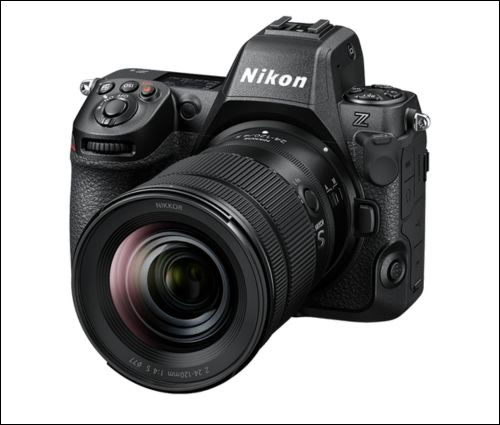
The Nikon Z8 is a powerhouse. It has a 45.7-megapixel sensor, lightning-fast autofocus, and can shoot 8K video. Yes, it’s expensive for a “beginner” camera, but if you can afford it and you’re serious about photography, this is the camera you’ll never outgrow.
What sets the Z8 apart is that it packs almost everything from Nikon’s flagship Z9 into a more compact and slightly lighter body. The autofocus tracks eyes, faces, and even animals with remarkable accuracy. The image quality in low light is excellent. The video features are professional-grade.
Is this overkill for most beginners? Absolutely. But if you’re someone who doesn’t want to upgrade in two years and you have the budget, the Z8 is an investment that pays off for a very long time.
2. Canon EOS Rebel SL3 / 250D – Tiny & Lightweight
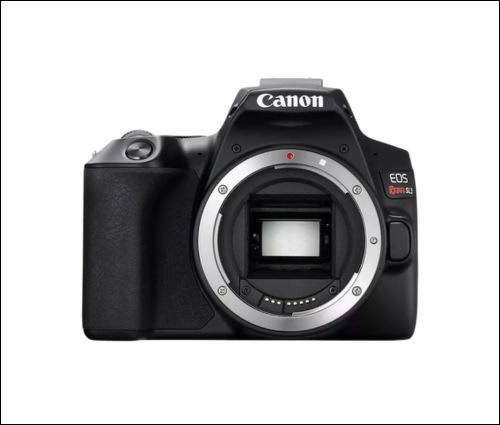
The Canon EOS Rebel SL3 is one of the smallest and lightest DSLRs ever made. If you want a “real camera” that doesn’t feel like you’re carrying a brick, this is worth a look.
It uses Canon’s APS-C sensor, which produces genuinely nice images. The autofocus is decent, the battery life is great (a real DSLR advantage), and the guided UI makes it easy for absolute beginners to understand settings without reading the entire manual.
The flip-out touchscreen is also handy for selfies and vlogging, though the 4K video crops in heavily, so video shooters should look elsewhere.
It’s worth noting this camera was released in 2019, so it’s getting a bit long in the tooth. You’re not getting the latest autofocus or video features. But if you find it on sale or used, it’s still a solid, easy-to-use starter camera.
3. Nikon Z6III – Best Everyday Camera
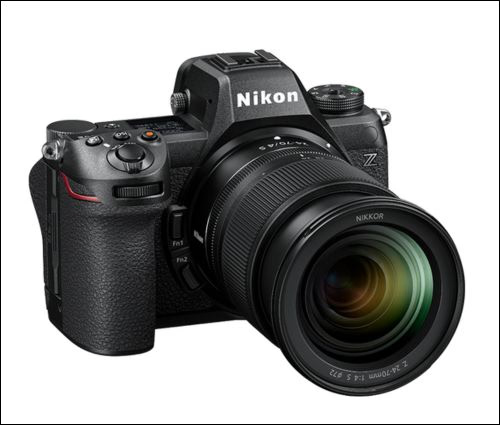
The Nikon Z6III is one of the most well-rounded cameras on this list. It delivers excellent image quality with a 24.5-megapixel partially stacked sensor, outstanding autofocus, and very capable video specs, including 6K RAW output.
What makes the Z6III stand out as an “everyday camera” is how it handles different situations. It’s fast enough for sports and action. It’s sensitive enough for indoor portraits without flash. It shoots clean, professional-looking video without a ton of additional gear.
For a beginner who knows they want to take this seriously and grow into the craft, the Z6III is the kind of camera that won’t hold you back at any stage. It’s not cheap, but it’s a genuine all-rounder with no real weaknesses.
4. Panasonic S5II / S5IIX – Best Camera for Video / Hybrid Shooting
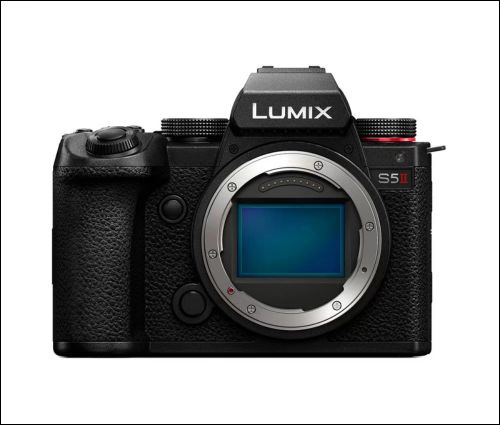
If you’re coming into photography from the video side — maybe you want to make cinematic-looking content, short films, or high-quality vlogs- the Panasonic S5II (or its sibling, the S5IIX) is the camera to consider.
Panasonic has always been strong on video, and the S5II is no exception. It shoots gorgeous 4K video, has excellent in-body image stabilization.
The phase-detect autofocus was a big upgrade from the previous S5, and while it’s still not quite at the level of Sony or Canon, it’s now very usable for most situations.
The photos are also excellent. This is a true hybrid camera; you can use it as your main stills camera and still produce broadcast-quality video.
5. Canon EOS R100 – Most Affordable for Beginners
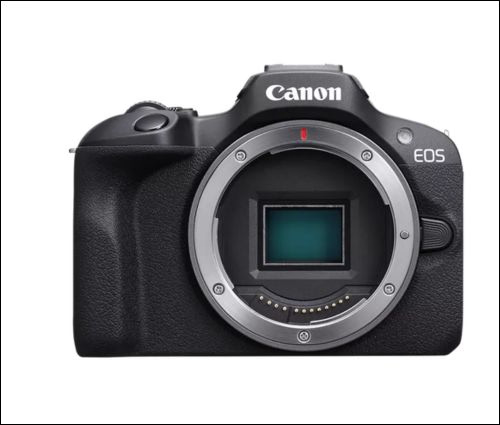
The Canon EOS R100 is the most affordable way to get into Canon’s RF mirrorless ecosystem. It’s a small, light camera with a 24.1-megapixel APS-C sensor, and it takes perfectly good photos in well-lit conditions.
Where the R100 cuts corners: it has no in-body image stabilization, a fairly basic autofocus system (no eye detection in video), and limited 4K video (with a crop). But for someone who wants to learn photography, understanding exposure, composition, and light won’t hold you back early on.
The bigger picture is that you’re buying into Canon’s RF lens system, which means you can upgrade to a better body later (like the R10 or R50) and keep all your lenses.
If budget is your main concern and you want a mirrorless camera, the R100 is about as affordable as it gets without going to the used market.
6. Olympus OM-D E-M10 Mark IV – Best Feature-Packed Camera
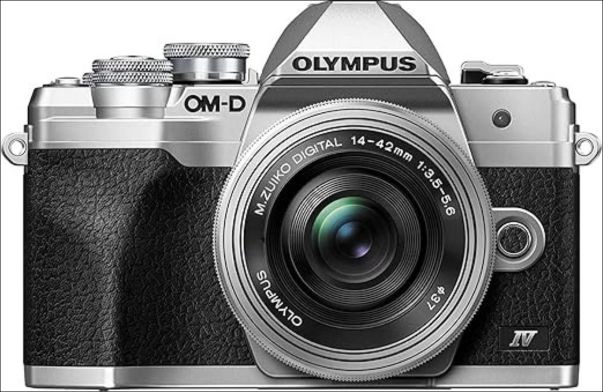
Don’t overlook the Olympus OM-D E-M10 Mark IV. It’s a Micro Four Thirds camera, meaning its sensor is smaller than APS-C, but it makes up for that with an incredibly impressive feature set for the price.
It has 5-axis in-body image stabilization (rare at this price), a fully articulating touchscreen, 4K video, and a very intuitive interface. The image quality is excellent in good light, and the stabilization helps significantly in lower-light situations.
The OM System (the company that took over Olympus’s camera division) has a huge lens selection at various price points, many of them compact and lightweight.
If you travel a lot and want a full-featured system you can actually fit in a bag without back problems, the E-M10 Mark IV punches well above its weight.
7. Nikon ZF – Best Full-Frame Camera for Beginners
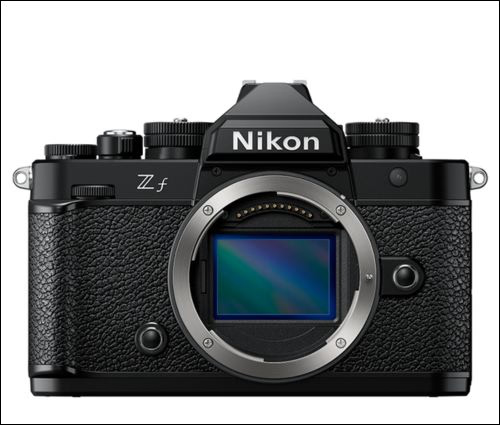
The Nikon ZF is interesting because it looks like a classic film camera, a retro-styled body with physical dials, but inside it’s a modern 24.5-megapixel full-frame mirrorless. It’s also the most affordable full-frame mirrorless camera Nikon makes.
The ZF uses the same sensor as the Z6III (almost), which means image quality is excellent. Autofocus is fast and reliable. It has in-body image stabilization. The retro design isn’t just cosmetic; those physical dials make it easier to adjust exposure settings by feel, which is genuinely helpful when you’re learning.
If the look of the camera matters to you and you’re willing to spend a bit more to start on full-frame, the ZF is a distinctive, capable option that’s also genuinely fun to shoot with.
8. Ricoh GR IIIx – Best Compact Camera
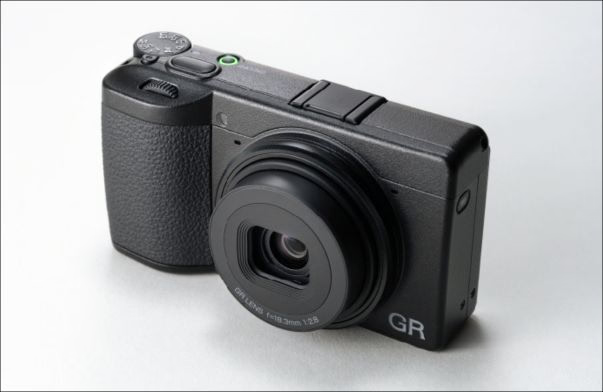
The Ricoh GR IIIx is unlike most cameras on this list. It’s a compact point-and-shoot, but don’t confuse it with a cheap pocket camera. It has a large APS-C sensor (the same size as most mirrorless cameras), a premium fixed 40mm lens, and image quality that rivals cameras twice its price.
The “fixed lens” part means you can’t swap lenses. What you see is what you get: a 40mm equivalent field of view (there’s also the GR IIIx HDF and the standard GR III with a 28mm lens). But that limitation is also its greatest strength: it forces you to think about composition and positioning rather than reaching for a zoom.
The GR IIIx slips into a jacket pocket. It’s nearly silent. It’s the camera a lot of street photographers carry because no one notices it. If you want to document your city, your travels, or everyday life in a discreet, high-quality way, this is one of the best tools available.
9. Sony ZV-E10 II – Best for Content Creators
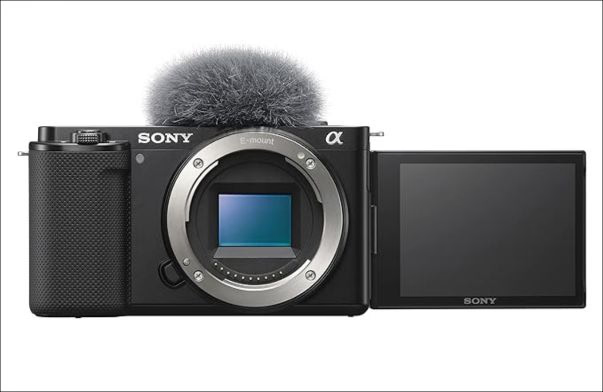
If you’re making content for YouTube, Instagram, or TikTok, the Sony ZV-E10 II was basically designed for you. It’s Sony’s second-generation vlogging camera, and the upgrades over the original are significant, especially the autofocus.
The ZV-E10 II has Sony’s latest AI-powered autofocus, which means it will track your face and eyes even when you’re moving around, looking away, or in challenging lighting. For solo content creators filming themselves, this is a game-changer.
It also has a fully articulating touchscreen (flip it out, flip it around, film yourself), decent video quality at up to 4K 60fps, a built-in neutral density filter, and a directional microphone. It’s a compact camera that’s clearly been designed by people who actually make content.
Access to Sony’s E-mount lens system is a bonus: it’s one of the largest third-party lens selections available, including many affordable options.
Beginner Camera Buying Mistakes to Avoid
Even with a great list in hand, there are a few common traps that trip up first-time buyers. Here’s what to watch out for.
1. Buying the Most Expensive Camera
More expensive doesn’t mean better, especially when you’re just starting out. A $3,000 camera doesn’t teach you composition. A $500 camera with a good lens will do that just fine. Buy what fits your budget comfortably, learn on it, and upgrade when you genuinely outgrow it.
2. Ignoring Lens Availability
When you buy a camera, you’re not just buying that one body; you’re buying into an ecosystem. Some systems (like Canon RF, Sony E-mount, and Nikon Z) have a huge range of lenses from budget to professional. Others have limited options or expensive glasses. Research the lens system before committing to a brand.
3. Choosing Based on YouTube Hype
A camera that a popular photographer raves about might have been gifted to them, or might be perfect for their specific style of shooting. That doesn’t mean it’s right for you. Look at what the camera does well, whether those strengths align with what you want to do, and whether the price makes sense for your situation.
4. Buying an Outdated DSLR
New DSLRs are largely done. Buying a brand-new DSLR in 2026 means you’re buying into a system that manufacturers are no longer prioritizing. The new lenses, the latest autofocus features, and the best accessories are all going to mirrorless. A used DSLR can be a good budget option, but a brand-new one at full price is hard to justify.
5. Overspending on Features You’ll Never Use
8K video sounds impressive. But if you’re a photographer who shoots family portraits and landscapes, you’ll never use 8K. Don’t pay for specs you don’t need. Be honest about how you’ll actually use the camera and buy accordingly. Spend the extra money on a better lens instead.
Frequently Asked Questions
Final Thoughts
Choosing your first camera doesn’t have to be complicated. The truth is, most cameras on this list will teach you the same fundamentals: light, composition, exposure, timing. The gear matters less than the practice.
That said, buying the right camera for your specific needs makes the whole experience more enjoyable. Pick something that fits your budget, suits what you want to shoot, and that you’ll actually carry with you. The best camera is the one you use.