


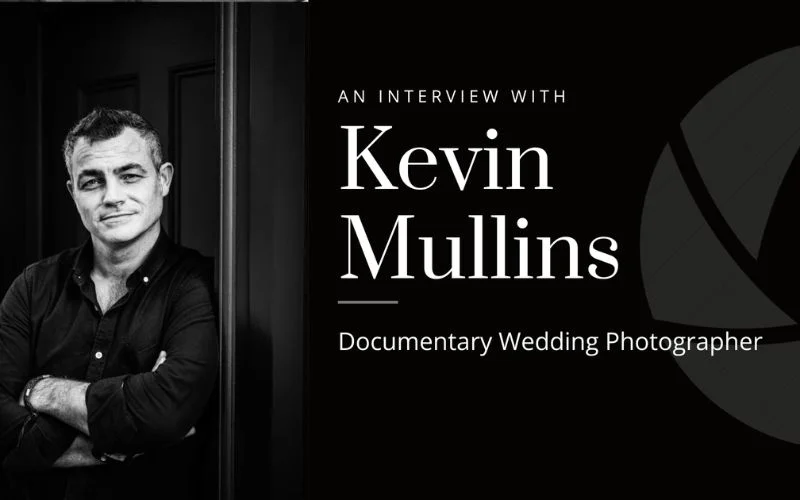
A documentary wedding photographer doesn’t only capture images, they preserve emotions, relationships, and moments that can never be recreated. Kevin Mullins has built his career around that very belief, documenting weddings with authenticity, empathy, and an instinct for storytelling.
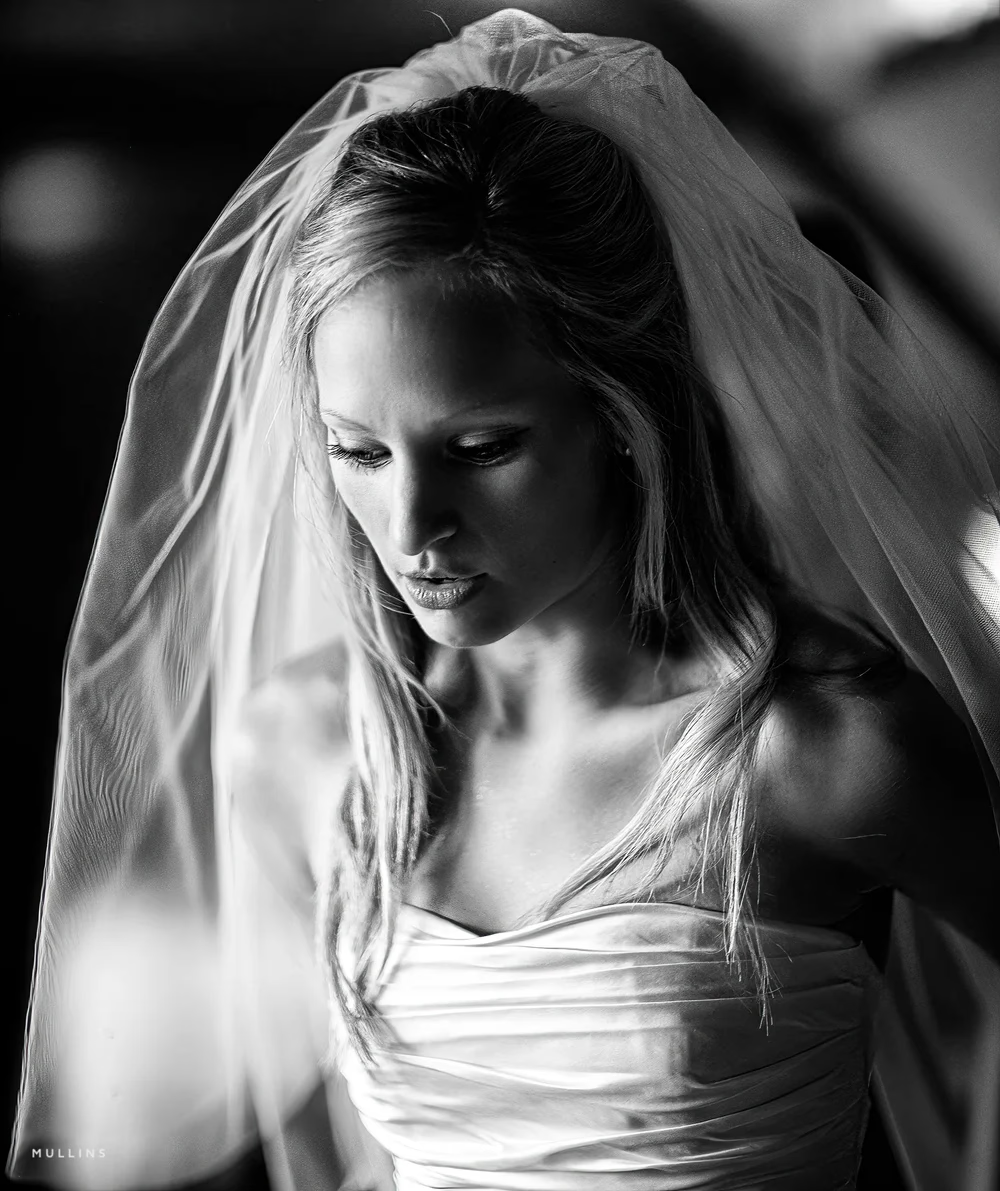
For more than a decade, Kevin has captured weddings through an honest, unobtrusive lens, creating photographs filled with emotion, humor, and humanity. His documentary photography style, celebrated black-and-white candid photos, and commitment to authentic storytelling have earned him international recognition.
In this interview, he opens up about his unlikely path into photography, his philosophy of photographing people being people.
Q.1 Before we get into the photography, tell us a bit about yourself. Where did you grow up, and what did life look like before all of this?
Ans. I grew up in Newport, South Wales, and I think that has always been a big part of who I am, even though I’ve lived in England for a long time now. I’m Welsh through and through, with all the rugby, humor and perhaps sentimentality that probably come with that.
Before photography became my career, life was very different. I worked in Financial IT in the City of London. It was a hard career, with structure, responsibility, reasonable money, but with bosses telling me what to do and being chained to a desk 9-5. I was commuting, working long hours, doing the corporate thing, and, at the time, it seemed like the right thing to do with my degree in Economics and Marketing.
But I don’t think I ever felt it was really me. I knew I needed to do something else because I was really burnt out, but I had no idea what.
Q.2 You came into photography through a very different career path in IT. Looking back, what was the moment that made you feel photography could become more than just an interest?
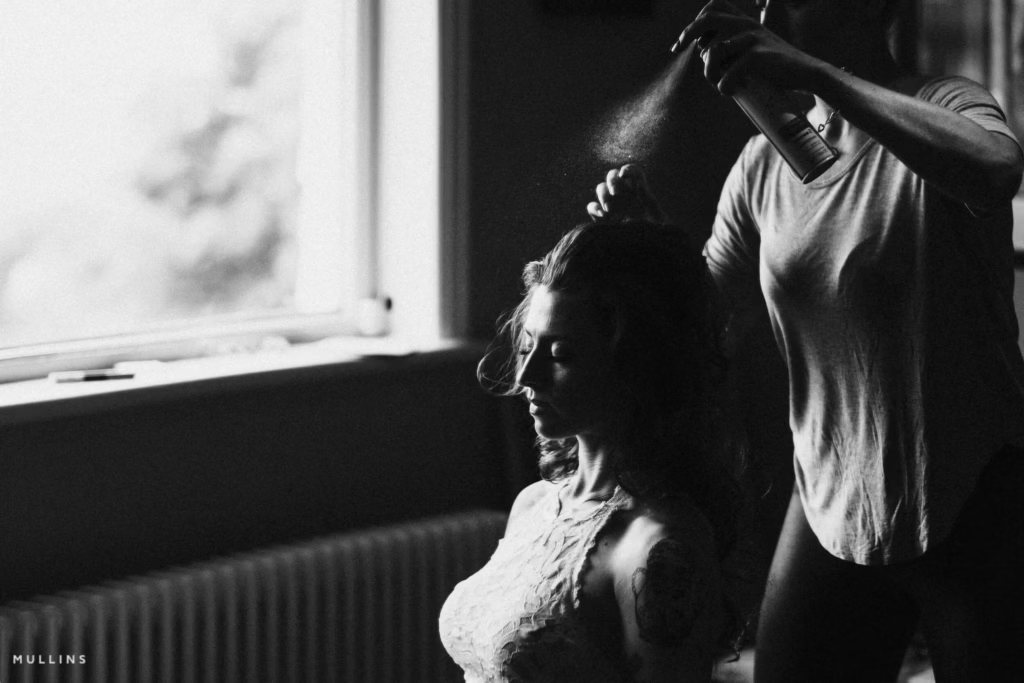
Ans. I used to read the free evening newspaper that was handed out on the tube. One day, I was looking at an article about weddings. I was already happily married, and weddings had zero interest to me, so I was about to flip the page, but my eyes were drawn to these black and white candid photos, and I just thought – wow! Look at those.
That seeded a thought. At this point, I’d never owned a camera and had no photography experience at all. I went home to my wife and said: “I can do this”! She said, “But you have no idea about photography”.
She was right, but I learnt quickly and went on to photograph around 800 weddings all in a purely documentary way.
I joke that it’s a good job the article that caught my attention was about feet; otherwise I might be writing this interview for Pedicure Monthly.
Q.3 You often describe your work as “photographing people being people.” How did that philosophy develop over the years?
Ans. That phrase really sums up how I see photography. For me, people are at their most interesting when they’re not performing for the camera.
In the early days, I knew what I didn’t want to do before I fully understood what I did want to do. I didn’t want to spend wedding days arranging people into shapes or asking them to recreate things that had already happened. I wasn’t interested in directing emotion; I wanted to notice it and tell the real story, not a fairy-tale version.
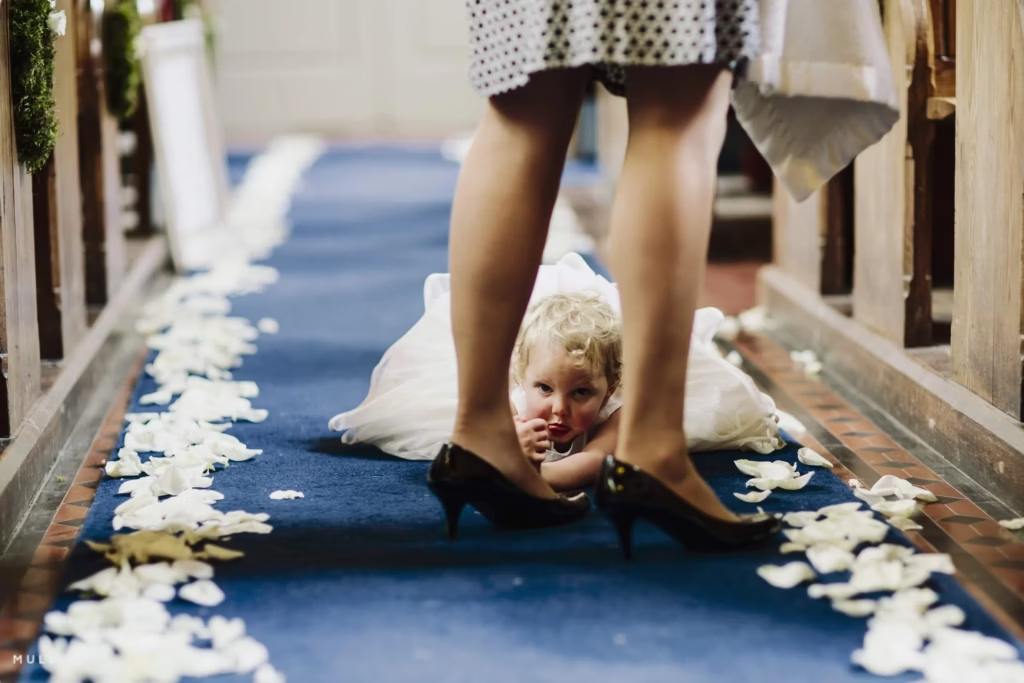
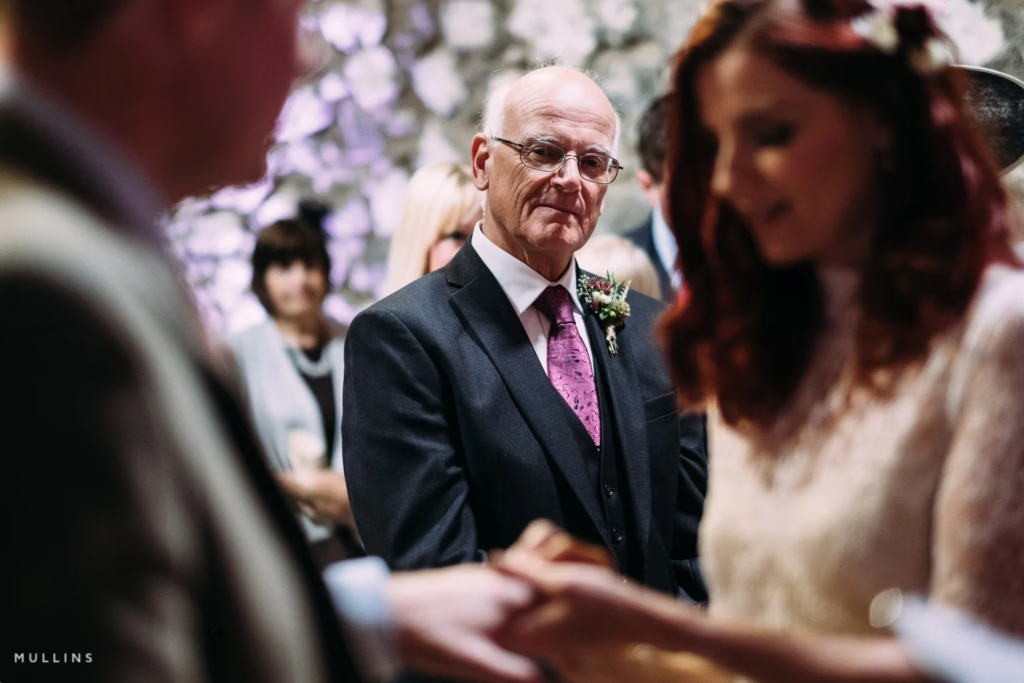
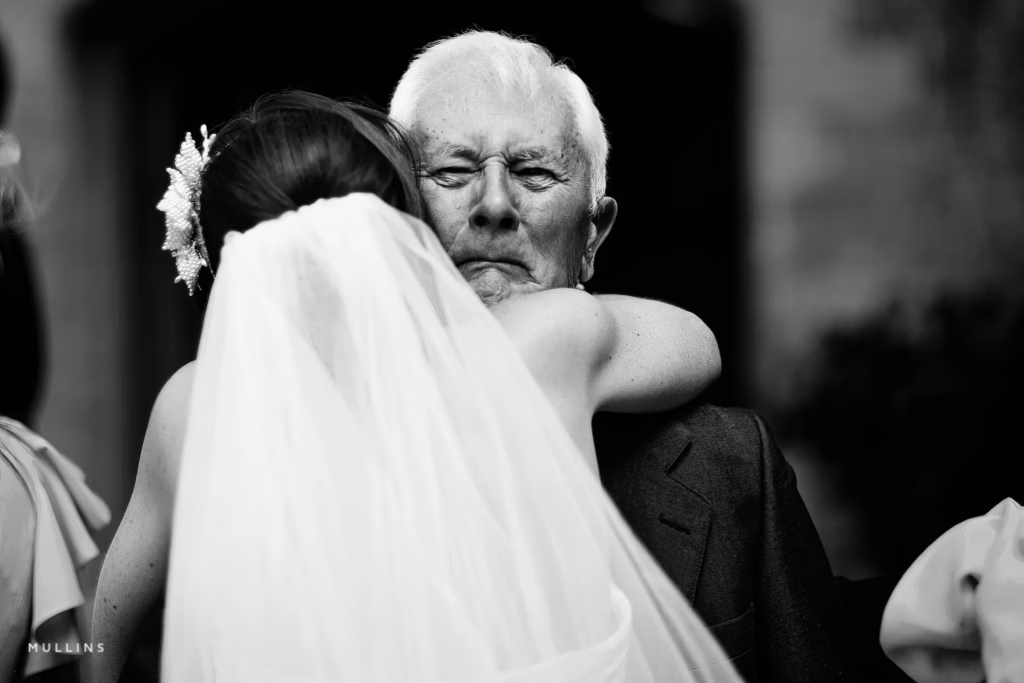
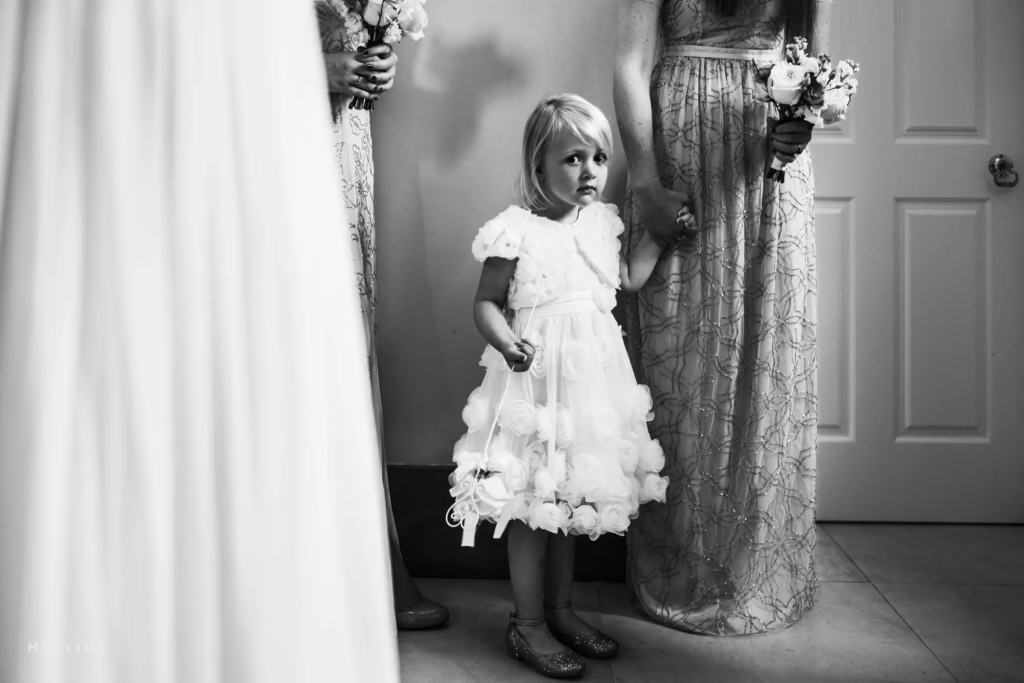
Over time, that became the foundation of everything. Weddings are full of little moments. Someone squeezing a hand. A dad trying not to cry. A child doing something completely inappropriate during the speeches. People laughing too loudly, looking nervous, feeling overwhelmed, being bored, being joyful, being human.
That’s what I mean by people being people. It sounds simple, but it’s actually quite hard to photograph well.
You have to watch, anticipate, and understand behavior.
And you have to resist the temptation to interfere just because you can.
Q.4 What was it about documentary photography that instantly felt right for you compared to more traditional wedding photography?
Ans. It felt honest. That was the biggest thing.
Traditional wedding photography never really appealed to me as a way of working. I completely understand why it exists, and there are photographers who do it beautifully, but it wasn’t where my passion was, and didn’t want to control the day. I didn’t want to turn a wedding into a photoshoot. And to be honest, I don’t have the personality for that.
Documentary wedding photography gave me permission to work in a way that felt natural. I could be close to people without taking over. I could observe, react, move quickly, and make pictures that had a real connection to the day itself.
I’ve always felt that every wedding has its own rhythm. It doesn’t need me to invent things. The story is already there. My job is to see it clearly and photograph it without trampling all over it.
That suited my personality as well. I’m curious about people. I like watching how they behave with each other. Documentary photography gives you a front-row seat to all of that, but with the responsibility not to become the main event.
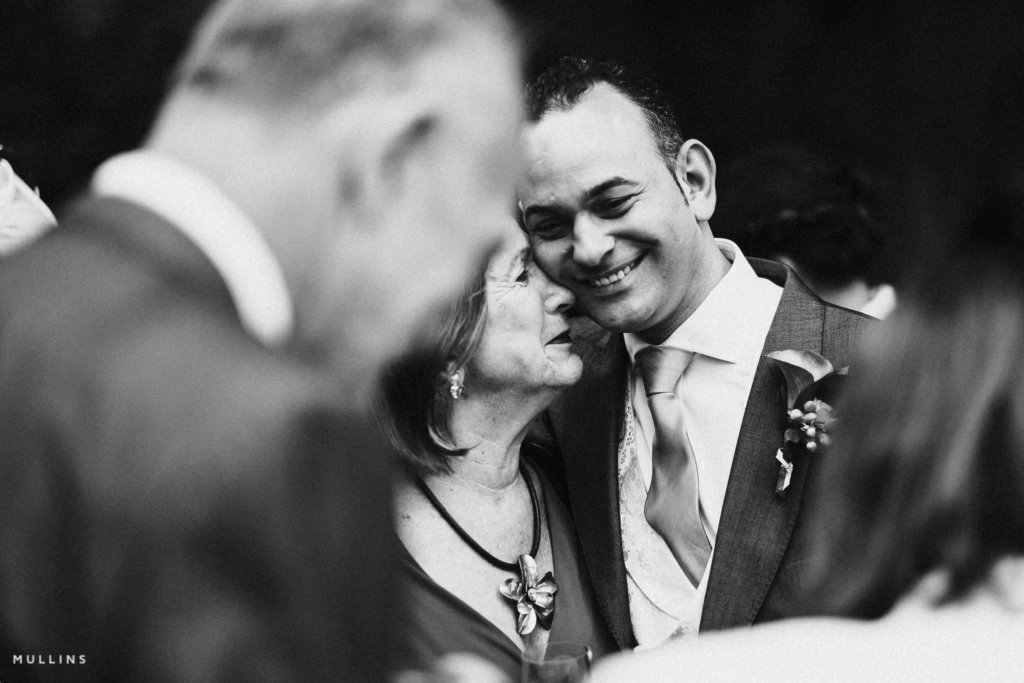
Q.5 After photographing more than 800 weddings, has your definition of a great photograph changed?
Ans. Yes, definitely. When you start out, you can get seduced by the obvious things. Strong composition, dramatic light, clever timing, and a bold black-and-white conversion. All of that matters, of course. I write a lot on my blog about light, composition, and moment.
But after photographing so many weddings, I think my definition of a great photograph has become more emotional and definitely less technical.
A great photograph doesn’t have to be spectacular. It doesn’t have to win awards. It doesn’t even have to make sense to a stranger.
Sometimes the most important photograph in a set is the simplest one. It might be someone’s hand on a shoulder, or a look between two people that only the family truly understands.
I’ve said many times that a photograph doesn’t have to be good; it just needs to be important. And I really believe that. The best photographs become more valuable as time passes, not less.
Shooting to chase “likes” on Instagram is a sure way to miss the most important images for the most important people – the clients. After all, it’s their story being told; they are the ones paying you. It’s not worth sacrificing that for the ego of like-counting on social media.
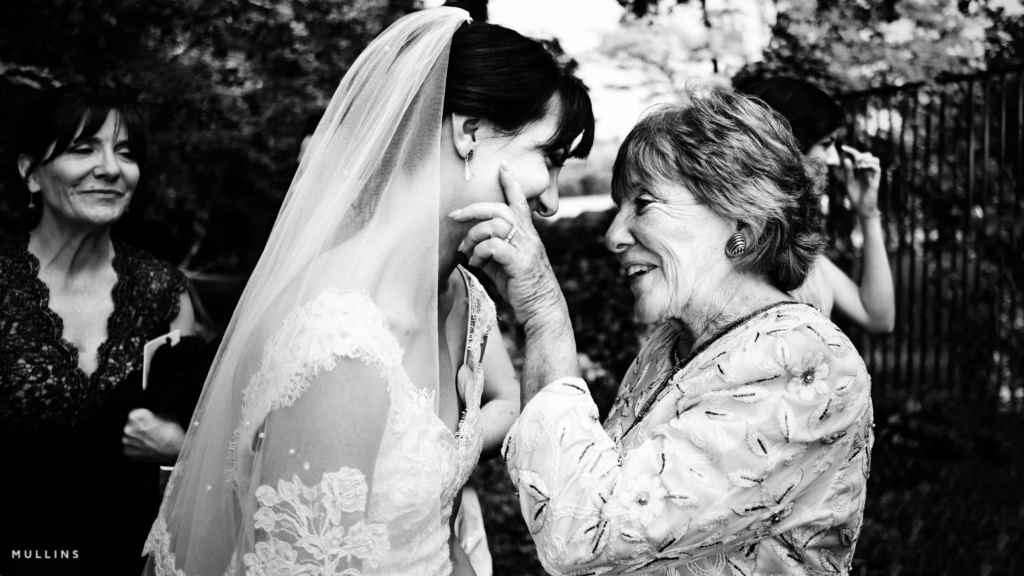
Q.6 Are there any moments from weddings that stay with you long after the day is over, even if they aren’t the most dramatic images?
Ans. Yes, and they’re often the smaller moments.
The dramatic images are easy to remember in one sense. Big emotion, big light, big reactions. But the moments that stay with me are often much quieter.
I’ve seen everything at a wedding. From the best man losing the rings, complications of split families, physical fighting, and even, at one wedding, a grandmother passing away in front of me.
But really, some of my absolute favourite moments are those driven by emotion. I remember those more clearly and more fondly.
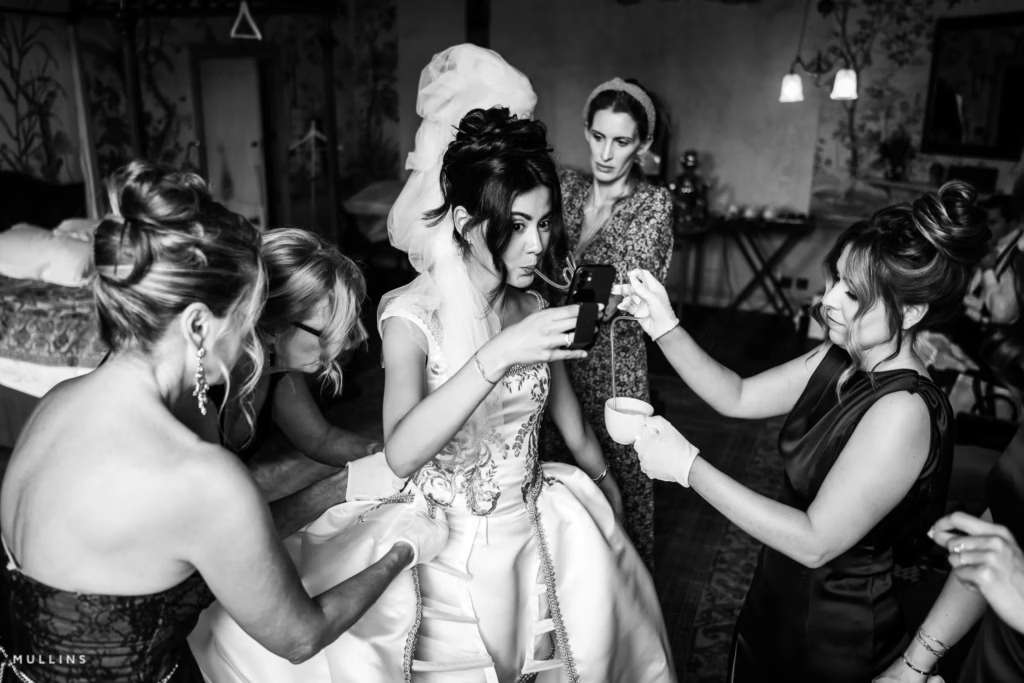
I think weddings are full of tiny emotional clues. My job is not just to photograph the big events, but to notice what is happening around them. Often the story is not in the centre of the room. It’s on the edge of the periphery.
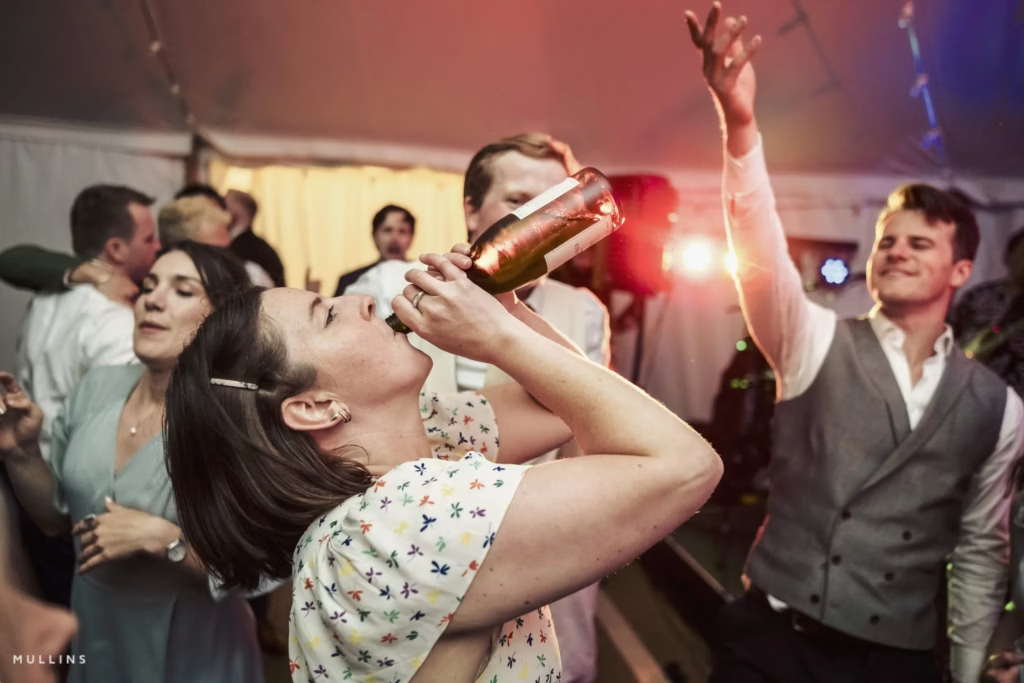
Q.7 What do you think documentary wedding photographers often overlook when trying to tell a real story through photographs?
Ans. They often overlook the ordinary bits. The clutter. The stuff.
There’s a tendency to chase the peak moments all day. The kiss, the confetti, the first dance, the big laugh during the speeches. And those moments matter, obviously. But a real story needs context. It needs the in-between moments too.
A wedding day is not just a list of events, and I’ve not once worked to a shot list. There are pauses, nerves, mess, humour, boredom, anticipation, relief.
If you only photograph the obvious highlights, you might produce a beautiful set of images, but you may miss what the day actually felt like.
I also think photographers sometimes overlook behaviour. The way people stand together. Who gravitates toward whom, who seems nervous, who wears their emotions openly, and who is quietly holding everything together. If you can read people, you can tell a much richer story.
For me, storytelling is not about photographing everything. It’s about knowing what matters and, just as importantly, knowing when to leave things alone.
This is why I encourage my students to not “spray-and-pray”. It’s tempting to think a camera that shoots at 30 frames per second will allow you to just machine gun the wedding. But that’s a trap. You don’t see. And anyone can be a photographer, but what sets us all apart is our observational skills. Burst shooting through a wedding is a guaranteed way to miss the real story unfolding.
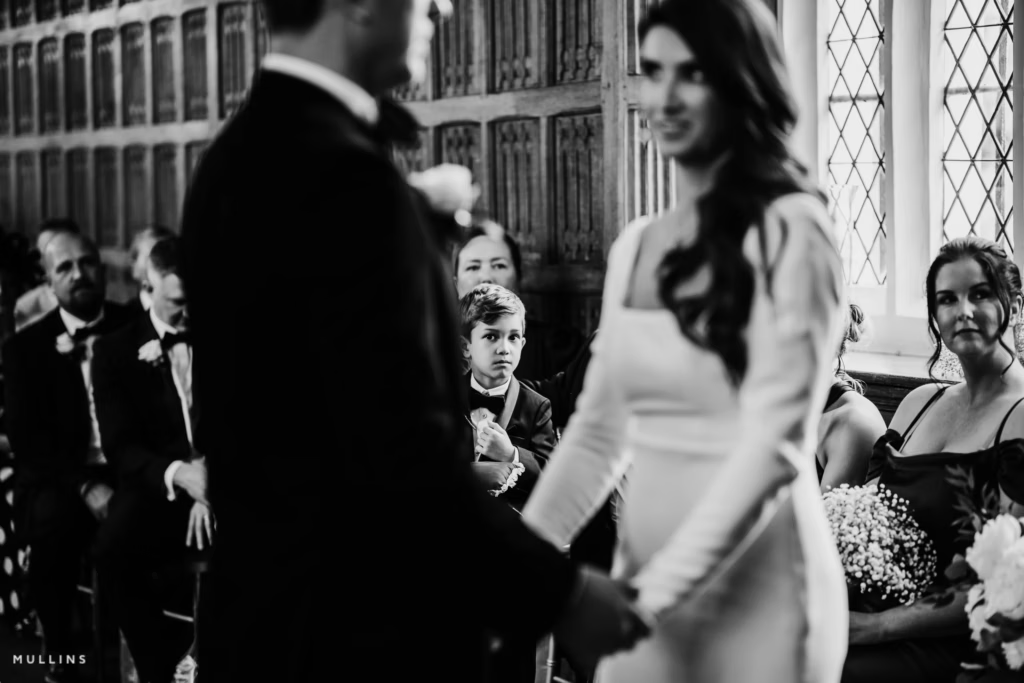
Q.8 Becoming Fujifilm’s first-ever wedding photography ambassador was a major milestone. What was your initial reaction when that opportunity came your way?
Ans. It was a huge honour. I don’t think I fully appreciated at the time how significant it would become, but I knew it meant something. I was very proud.
When Fujifilm first approached me, I was already using the cameras in a very real way. It wasn’t a marketing exercise for me. I had moved my wedding work to Fujifilm because the cameras suited the way I worked. They were smaller, quieter, more discreet, and they allowed me to stay close to moments without feeling like I was bringing half a studio with me.
So, to be recognised by Fujifilm for that approach was very special. It felt like a validation not of the gear choice, but of the way I photographed weddings.
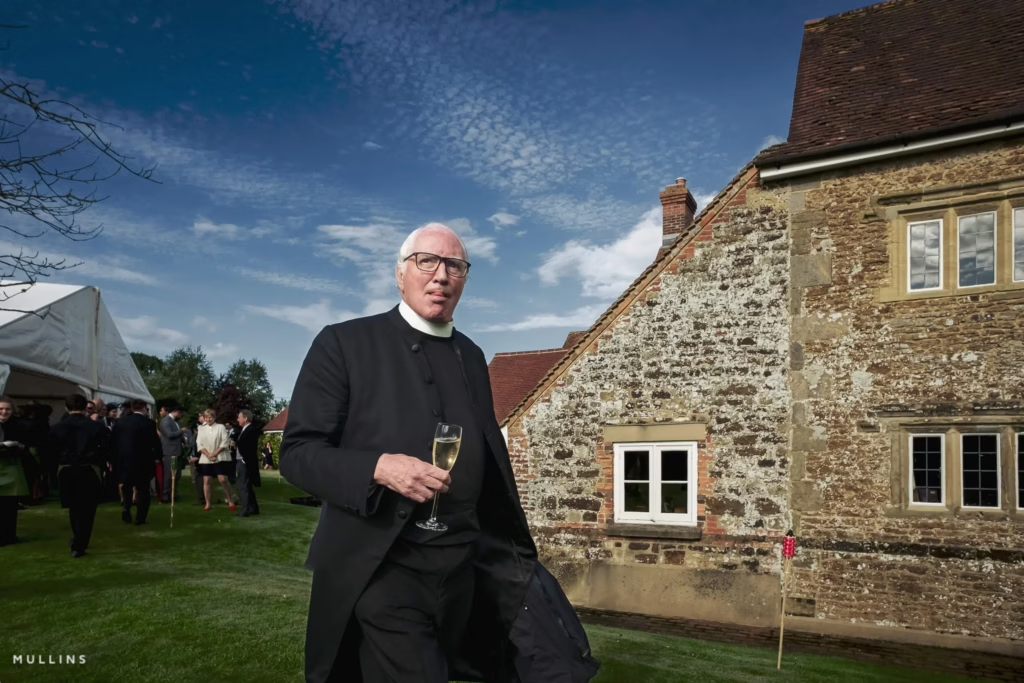
I also liked that it challenged a few assumptions at the time. Documentary wedding photographers were still expected to use big DSLRs and fast zooms. I was using small mirrorless cameras and prime lenses, working very quietly, and building a career around documentary wedding photography. Becoming an ambassador helped show many more people that there was another way to do it.
Q.9 Of all the achievements in your career, which one feels the most personal to you?
Ans. I think building a sustainable career on my own terms is the most important.
Awards are lovely. Recognition is lovely. Working with Fujifilm was a huge thing. Being asked to speak across the world, teach, write, and share my work has all been incredibly rewarding.
But the thing I’m probably most proud of is that I managed to build a career around the kind of photography I genuinely believed in.
I didn’t go into weddings and follow every trend or try to make my work look like whatever was popular that year. I stuck with a documentary approach because it felt right to me.
But it wasn’t necessarily the easiest route. It took time to find clients who understood it, and it took time to explain it. It took time to build trust around it.
So yes, the most personal achievement is probably that I managed to make a living by photographing people honestly, in a way that still feels like me.
And that living was very profitable and afforded me a great work/life balance. When my kids were young, I was there all during the week. I never took weddings in August – always taking a month off entirely, which sounds a bit like Santa Claus taking Christmas off, but I set up the business to work in my way, on my terms and to make my family more secure, and it worked.
Q.9 You started teaching photographers after building your own career without formal photography education. What motivated you to begin sharing your knowledge?
Ans. I didn’t come into photography through art school or formal training. My dad didn’t give me an old rangefinder when I was five or anything like that. I learned by doing, making mistakes, trying things, failing at things, and figuring out what mattered most to the people who mattered most – my clients.
That kind of self-learning is valuable, of course, but it is also lonely. We didn’t have YouTube or AI in those days. In fact, we didn’t even have Facebook or Instagram.
When I started teaching, I wanted to share the things I wish someone had explained to me earlier. Not just camera settings or business tips, but the way of thinking behind the work. How to watch people, to build a body of work, to trust your own instincts, to avoid being dragged around by trends on social media.
I don’t teach because I think everyone should work like me, of course. I teach because I think photographers should find a way of working that feels important to them.
It seems like a natural progression.
Of course, at first, when people started asking me to do workshops, etc., I thought, “me? why?” But then I got asked to give talks in places like Argentina and Japan, so I thought there would be enough people willing to listen to me and my messages.
Q.10 When you’re not working, what does a perfect day look like for you?
Ans. Well, I love taking my son to football. We are both huge Wales fans and have been to all home (and some away) Wales games together for several years. I’m a black belt in Judo and an accredited British Judo coach, so some of my evenings are spent coaching my Judo club.
When I’m quiet, I play a lot of online chess, and I love just getting out and about with my camera. I’ll often jump on a train to London and spend the day just doing Street Photography for myself. And of course, watching trashy telly with my wife, Gemma.
Q.11 Outside of photography, you’re into judo, rugby, and you even host a country music radio show. Which one surprises people the most when they find out?
Ans. Probably the country music radio show.
I used to host a show called The Country Boyo Show. Good country music is often about small details, ordinary lives, humour, loss, memory and place. There’s a theme there, I suppose.
People sometimes expect photographers to be into very serious, very cool things. I’m not sure I’ve ever managed that convincingly.
I sweat at judo, swear at football, and play a lot of Dolly Parton records.
Q.12 What are your goals for the next six months? Anything new you’re working on or excited about?
Ans. The next six months are really about building more useful resources for photographers.
I’ve moved into a stage of my career where education, writing, mentoring and creating tools for photographers are a big focus.
I’m working on more online course material, more Fujifilm-related resources, and more practical guides for photographers who want to better understand their cameras.
My Lightroom Presets, which were born of spare time during COVID and subsequently built upon, are important to me. I put a lot of time into those, and many people use them.
And as I write this, I’m 2 weeks away from heading off to Spain for three months. I’ll have some time alone, some friends will come out, the family will come out (sadly Gemma’s job doesn’t allow her three months off!), and it will be a lovely, relaxed time.
Q.13 Finally, what would you say to someone who’s just starting out in photography and feels like they’re figuring it all out on their own, the way you once did?
Ans. I’d say that feeling lost and confused is part of it.
Nobody starts with a perfect landing. You find your feet by working, looking, failing, editing, questioning yourself, and then doing it all again.
It can feel frustrating, especially now, because everyone else’s work is so visible, but remember they only show the best of the best. You can easily convince yourself that everyone knows exactly what they’re doing except you. They don’t, honestly.
The important thing is to keep making pictures and to pay attention to what genuinely interests you. Not what is fashionable. Not what gets quick attention on Instagram.
What do you keep coming back to? What kind of photographs make you feel something? Do you notice that other people seem to miss?
Learn the craft, of course. Understand light, composition, timing, editing and all the practical stuff. But don’t lose sight of the bigger thing.
Photography is not just about cameras. It’s about observation.
Be honest about the work you want to make, and don’t be afraid to build a career that looks different from everyone else’s.
Closing Notes
Kevin Mullins’ journey is a testament to the power of authenticity, observation, and storytelling. Through his documentary approach, he has captured countless meaningful moments while inspiring photographers to focus on what truly matters.
We thank Kevin for sharing his experiences and insights, and we wish him continued success in his photography and teaching endeavors.
To check out more of Kevin’s work: Website